Published in China Christian Daily, June 22, 2017, by Ruth Wang
The fourth Annual Christian Forum for Reconciliation in Northeast Asia took place May 29-June 3, 2017 on Jeju Island, South Korea … (continue reading)

Published in China Christian Daily, June 22, 2017, by Ruth Wang
The fourth Annual Christian Forum for Reconciliation in Northeast Asia took place May 29-June 3, 2017 on Jeju Island, South Korea … (continue reading)

By Sue Park-Hur, The Mennonite Magazine, June 17, 2016
On May 22, I took the red eye flight to Hong Kong to attend the third annual Christian Forum for Reconciliation in Northeast Asia hosted by Duke Divinity School and Mennonite Central Committee. The forum brought together 55 Christian scholars, educators, practitioners, pastors, and church leaders from mainland China, Hong Kong, Japan, Korea, and the U.S with the purpose of strengthening our work for God’s ministry of peace and reconciliation in Northeast Asia. This forum being my third, I looked forward to reconnecting.
Sungbihn Yim (a participant at the 2015 Christian Forum for Reconciliation in Northeast Asia) has issued a strong, sharp call for reformation in the Korean church, in order to become a model of community for the unification of South and North Korea. His article “The Task of the Korean Church for Peace in the Time of Globalization: Seeking Ecumenical Social Ethics in the Context of Northeast Asia” is published in the Princeton Seminary Bulletin. Dr. Yim is former dean and professor of Christianity and Culture at Presbyterian University and Theological Seminary in Seoul, Korea.
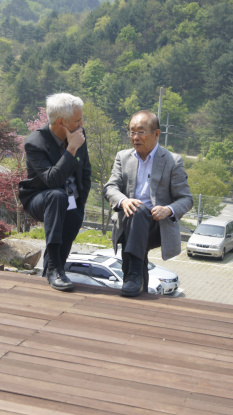
By Chris Rice, January 14, 2016
“To pursue reconciliation is to become a bridge. This means we must be willing to be walked on from both sides” Syngman Rhee
The remarkable life of one of the world’s most faithful witnesses for peace between the divided Korean people ended suddenly a year ago. Syngman Rhee became a close friend and colleague, and two things he said in particular continually stick with me.
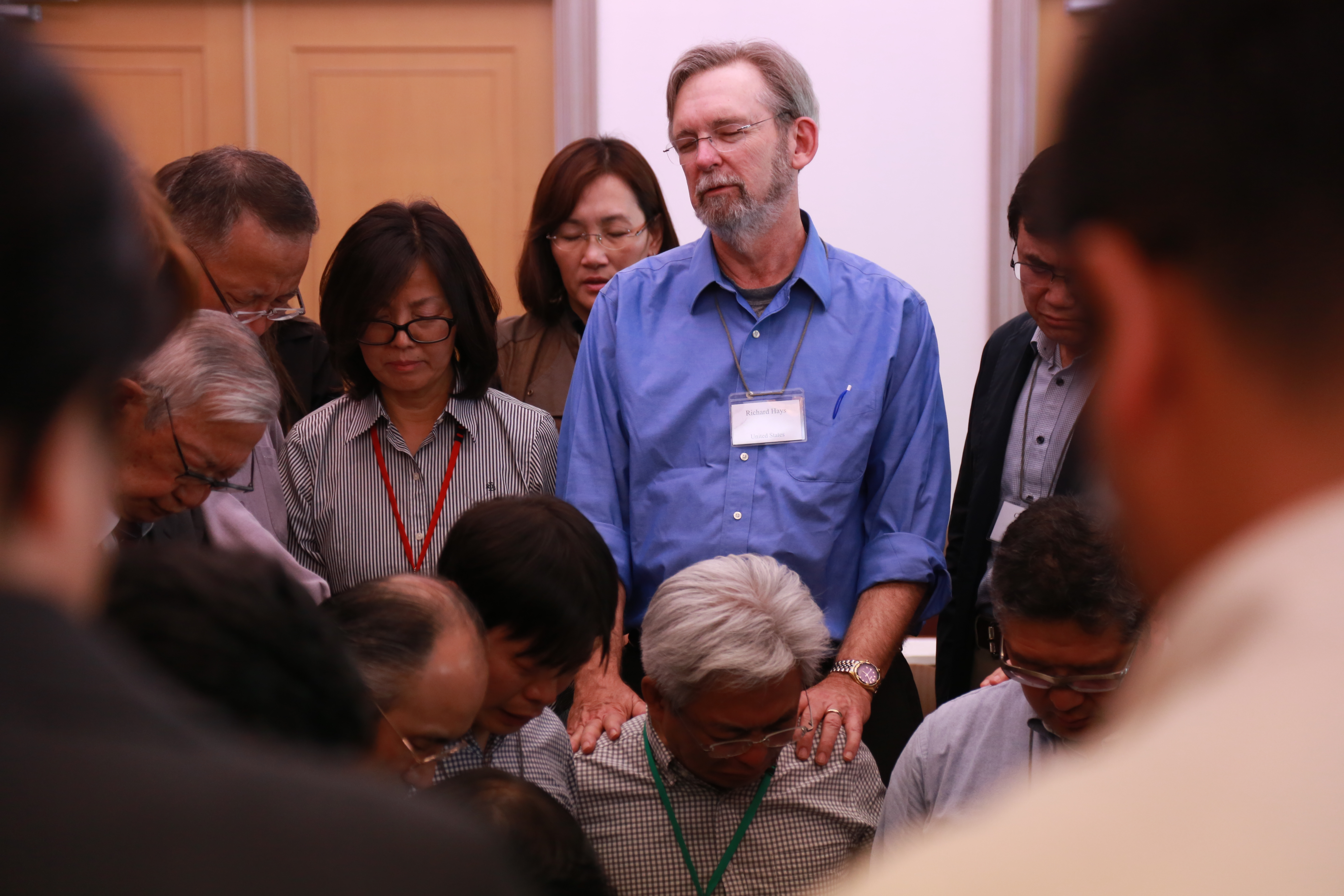
Duke Divinity School web site, August 6, 2014
“Peacemaking and nonviolent reconciliation are not optional political preferences; they stand at the heart of the gospel and anchor the identity of the church,” said Richard Hays, former dean of Duke Divinity School and George Washington Ivey Professor of New Testament.
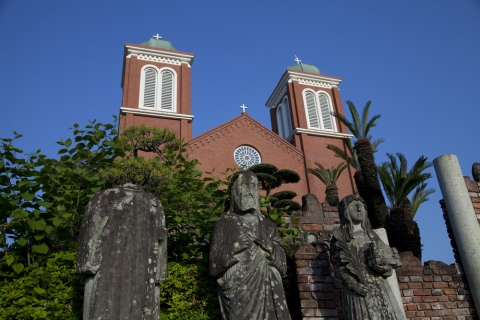
By Atsuyoshi Fujiwara, Sojourners magazine, August 1, 2015
The devastating power unleased on Nagasaki and Hiroshima 70 years ago shocked the human community. I have friends whose families suffered when atomic bombs fell on those two Japanese cities.

By KyongJung Kim, Korea Anabaptist Center, June 3, 2015
At the Nagasaki Forum, we received an apology from Japan for its colonization of Korea. Although we Koreans were the victims in Japan’s rule, we also admitted the uncomfortable truth that we have also been an attacker and acknowledged the many people Korea killed during the Vietnam War. The truth that may shock everyone is that nations who are victims in a situation, can also be an attacker in another. However the question is church. Christ’s church can never be a victim who also becomes the attacking side and robs people of their lives, because self-indulgent work with national violence is contrary to Christ and blocks the work aligned with him
May 24, 2015

Korean Catholic Press, May 19, 2015
2015년 4월 20일부터 25일까지 5박 6일간, 일본 나가사키에서 열린 <동북아시아 크리스챤 화해 포럼>에 참가할 기회를 얻었습니다. <크리스챤 화해 포럼>은 오래 전부터 세계 평화 공동체 구축에 매진해 온 메노나이트 (Mennonites – 재세례파)가 주축이 되어, 역사적 분쟁지역이었던 아프리카와 동북아시아에서 신앙인들이 모여 평화와 화해 활동을 모색하는 자리입니다.


